
In response to an increasingly complex business environment characterized by an evolving global economic landscape, worsening geopolitical conflicts, and intensifying extreme weather events, risk management is the key to ensuring business continuity and sustainability. Guided by the principles of sustainable operations, we have implemented systemic risk management mechanisms to ensure timely identification and evaluation of and response to various risks, strengthening our organizational resilience and competitive edge.
Innolux’s Board of Directors, the highest risk management authority of the Company, is responsible for reviewing and approving risk management policies and major decisions in accordance with overall operational guidelines and external changes. To proactively address potential risks, our business units are responsible for identifying and managing risk factors relevant to their operations, and for regularly reporting risk status and corresponding mitigation measures. To support enterprise-wide risk mitigation efforts, the risk management unit monitors overall corporate risk and provides control and management solutions through systematic assessment, monitoring, and reporting mechanisms. The Audit Office oversees the implementation of these risk management processes and reports regularly to the Audit Committee and the Board of Directors, ensuring transparency and continuous improvement in risk governance.
To strengthen our risk governance structure, we have adopted the widely recognized COSO Enterprise Risk Management (ERM) framework and implemented a Three Lines of Defense model to implement risk identification, monitoring, and mitigation. In doing so, we aim to enhance operational resilience and improve the overall effectiveness of corporate governance.
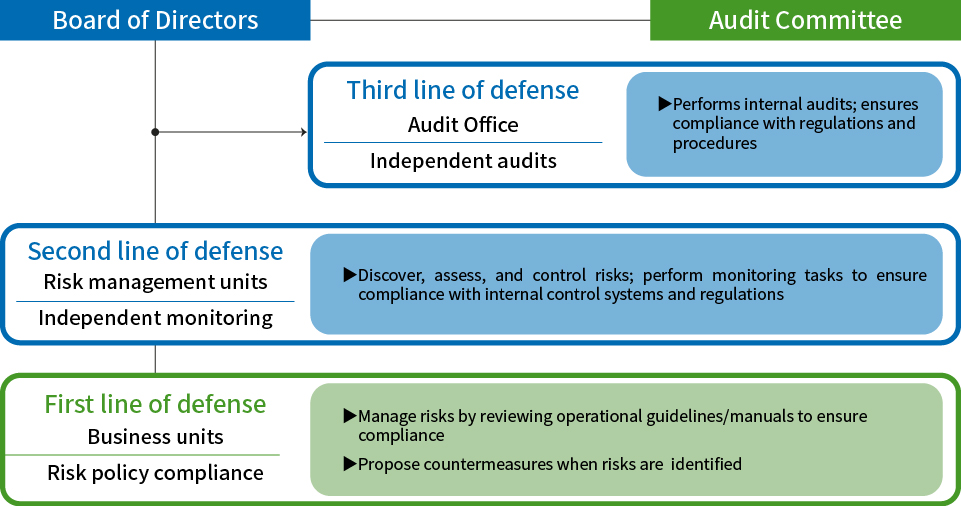 Innolux’s Risk Governance Architecture
Pursuant to the Risk Management Policy and Procedures adopted by the Board of Directors in 2022, Innolux has developed a comprehensive risk management mechanism to ensure sustainable business operations in the fast-changing market enviroment. Based on the Company’s operational guidelines, we have formulated a five-step process that includes identification, evaluation, monitoring, disclosure, and response in order to determine the scope of each risk category and take the necessary action to reduce potential losses.
The Company continues to optimize its risk management mechanisms by dynamically adjusting strategies and monitoring systems to strengthen control and oversight of key risk factors across strategic, operational, financial, climate-related, and environmental areas. This approach integrates risk awareness into our corporate decision-making processes, thereby enhancing overall organizational resilience and responsiveness.
 Innolux’s Risk Management Processes
In response to global economic shifts, supply chain disruptions, rising regulatory demands, and the impact of extreme weather events, Innolux has integrated sustainability management strategies and material topics into its risk management. Guided by the Global Risks Report published by the World Economic Forum (WEF), the Company has developed a comprehensive risk identification and mitigation mechanism encompassing strategic, operational, financial, and climate and disaster related risks. To promote forward-looking risk management, Innolux also monitors potential high-impact emerging risks expected to arise within the next 1 to 5 years. These are marked with an asterisk (*) among our strategic risk factors.
Leveraging the Enterprise Risk Management (ERM) mechanism, the Company tracks market trends and utilizes internal and external professional insights to support department heads in identifying and assessing potential risks. Risk factors are evaluated both qualitatively and quantitatively based on risk appetite, frequency of occurrence, potential impact, and the effectiveness of existing controls. Each responsible unit is tasked with formulating appropriate mitigation strategies, while regularly monitoring and reviewing their effectiveness. This approach helps to ensure the effectiveness of our corporate governance practices as well as the long-term resilience of our operations.
| Areas | Measures |
|---|---|
| Risk governance structure | We have strengthened inter-departmental collaboration to improve risk identification, assessment, and the execution of systematic response measures and ensure a comprehensive and effective implementation of risk management. |
| Risk management capability | In accordance with the IFRS Sustainability Disclosure Standards, we have established a risk management task force composed of the audit, finance, operations, legal, and information security departments to promote inter-departmental initiatives focused on strategic and operational risks and to strengthen the risk identification and response capabilities of department heads and supervisors. |
| Dynamic monitoring of risk trends | With reference to GRI, COSO, and other risk management standards, we implement data monitoring and external analysis mechanisms to identify emerging risk scenarios and improve the foresight and effectiveness of our ESG risk management. |
| Supply chain and operational resilience | We continuously enhance supply chain management and emergency response standard operating procedures (SOPs) to mitigate the risks of raw material shortages and unexpected operational disruptions, and to improve our capacity for anticipatory risk management, emergency response, and extreme incident handling. |
| Risk identification and performance management | We have established a risk incident reporting and review system to continuously enhance risk response planning, while integrating internal controls and management audits to ensure the traceability and effectiveness of risk mitigation. |
To ensure sustainable business operations, Innolux has formulated comprehensive response strategies based on the following categories:
| Risk Factor | Description | Potential Impacts | Mitigation Strategies |
|---|---|---|---|
| Investment risk arising from geopolitical conflicts* | Intensifying competition between the U.S. and China, heightened cross-strait tensions, and growing uncertainties in global political, economic, and policy environments along with deepening trade barriers and geopolitical risks have presented significant challenges to corporate marketing strategies and long-term competitiveness. | Geopolitical tensions and policy changes have increased market uncertainty, affecting corporate strategic planning, investment returns, and global competitiveness. The expansion of international trade barriers and the accelerating trend toward industrial de-risking have intensified pressures for supply chain restructuring, contributing to operational volatility, long-term financial risks, and potential fluctuations in investment portfolio value due to market instability. |
|
Economic cycles and shifting customer demand | Global economic fluctuations, high inflation, and shifting consumer demand have intensified market demand volatility and price competition within the panel industry, posing operational challenges. | Reduced consumer spending has constrained end-product sales, affecting customer orders and company revenues. Rising market competition, pricing pressure, and the risk of overcapacity have further impacted profitability. |
|
| Ethical Risks Associated with AI* | As AI technologies are increasingly applied to manufacturing, decision-making, and automation processes, ethical risks such as data privacy concerns, lack of transparency, and algorithmic bias have begun to emerge, posing challenges to corporate reputation and regulatory compliance. |
|
|
| Risk Factor | Description | Potential Impacts | Mitigation Strategies |
|---|---|---|---|
| Geopolitical and trade policy changes impact global supply chain deployment | Global political and economic instability, such as regional conflicts, trade barriers, and extreme weather incidents, has impacted supply chain stability. Heightened U.S.-China trade tensions along with increasing tariffs and export controls have increased operational uncertainty. As the global trend toward de-risking intensifies, customers are demanding diversification and de-Sinicization of supply chains, adding to pressure on costs, lead times, and supply chain resilience. |
|
|
| Talent Shortages Caused by Technological Transformation and Intensifying Market Competition | Driven by rapid advancements in the technology sector, global demand for highly skilled professionals in the semiconductor, display technology, and AI industries has surged, intensifying competition for talent. Innolux’s continued pursuit of technological transformation has further increased its reliance on specialized expertise, leading to a growing imbalance between talent supply and demand. As a result, the company faces increasing pressure in both recruitment and retention, which may impact the pace of transformation and overall competitiveness. |
|
|
| Elevated cybersecurity risks amid digital transformation and widespread AI adoption | Rapid digital transformation and widespread AI adoption have increased the value of corporate data assets, heightening cybersecurity risks. The growing frequency of cyberattacks, data breaches, and ransomware incidents poses a serious threat to business operations and corporate reputation. |
|
See 2024 ESG Report -- 2.2.4 Information Security Management |
| Asset and business interruption risk | Natural disasters, force majeure, or accidents (such as earthquakes, typhoons, or fires) pose potential risks to company assets, including plants, equipment, and inventory, disrupting production and business operations. |
|
|
| Risk Factors | Description | Potential Impacts | Mitigation Strategies |
|---|---|---|---|
| Foreign exchange risk management and financial stability | Amid increasing global economic and political volatility, fluctuations in major currencies such as the U.S. dollar and Japanese yen pose risks for revenue, capital expenditure, and production costs. Unstable interest rate policies may further increase financing costs, affecting financial stability and operational flexibility. |
|
|
| Credit risk and accounts receivable management | Global economic fluctuations and financial market instability may affect customers’ financial health, increasing the risk of accounts receivable collection. A decline in customers’ payment capacity could impact the Company’s cash flow and compromise operational stability. |
|
|
| Liquidity risk and capital management | Rapid shifts in the global economy, unexpected financial events, or tightening markets may disrupt capital flows, impact operational liquidity, increase short-term funding pressures, and pose risks to business continuity. |
|
|
| Investment management and financial stability | Innolux’s core business and its reinvestments are concentrated in similar sectors and geographic regions, making them susceptible to global political and economic fluctuations, supply chain restructuring, inflation, and rising interest rates. This concentration heightens the risk of return volatility and may impact the Company’s financial stability and long-term competitiveness. |
|
|
In keeping with the Task Force on Climate-related Financial Disclosures (TCFD) framework and guided by the Global Risks Report published by the World Economic Forum (WEF), Innolux conducts an annual, systematic identification and assessment of risks across the operational, financial, climate-related, and environmental dimensions. Both qualitative and quantitative analyses are employed to formulate response measures, ensuring a comprehensive and effective risk management approach.
Climate-related risks are assessed according to the four core pillars of the TCFD framework: Governance, Strategy, Risk Management, and Metrics and Targets. The outcomes of this assessment are disclosed in Chapter 5 of this report, Environmental Risk Management Strategies.
The table below consolidates key physical, transformation, and environmental risks associated with climate change. It also provides illustrative cases to highlight potential impacts on Innolux’s operations, while outlining our corresponding mitigation measures.
| Risk Factors | Description | Potential Impacts | Mitigation Strategies |
|---|---|---|---|
| Operational disruption due to natural disasters | Taiwan is located in a seismic zone and is frequently affected by typhoons and other natural disasters, posing significant risks to facility infrastructure and business continuity. These events may impact production and disrupt supply chain stability. |
|
|
| Water shortage risk | Due to the effects of climate change, extreme weather events have increased in frequency. In recent years, Taiwan has faced recurring droughts, complicating water allocation and potentially affecting the process water supply, factory operations, and supply chain stability. |
|
|
| Renewable energy installation risk | Due to the government policy mandating that energy-heavy industries increase their investment in green energy, the Company is required to establish a designated percentage of renewable energy capacity. Improper construction management or regulatory non-compliance could pose safety issues, affect operations, and damage corporate reputation. |
|
|
| Natural resource and biodiversity risk | Manufacturing processes involve the use of natural resources, and poor resource management may result in depletion and ecological degradation, undermining environmental sustainability and corporate operational stability. With tightening global environmental regulations, companies must actively address natural resource conservation and biodiversity to mitigate reputational and compliance risks. |
|
|
As global industries undergo rapid transformation, traditional risk management frameworks are no longer sufficient to fully address emerging challenges. At Innolux, we closely monitor current key operational risks while proactively identifying emerging risks that could significantly impact our business in the next one to five years. This approach enables us to maintain a competitive edge amid industry transformation, technological advancements, and evolving environmental regulations.
The risk factors outlined in this chapter have been identified and assessed through our Enterprise Risk Management (ERM) framework, with reference to the World Economic Forum’s Global Risks Report, the Dow Jones Sustainability Indices (DJSI), and GRI Standards. These efforts strengthen our forward-looking risk management capabilities and enhance the company’s overall operation resilience.
| Risk Factors | Corresponding Material Topics | Issue Areas | |
|---|---|---|---|
| Strategic risks | Investment risk rising from geopolitical conflicts | Supply chain management | Governance |
| Economic cycles and shifting customer demand | Innovation and R&D | Governance | |
| Ethical risks associated with AI*1 | Managed under GRI general disclosures | - | |
| Operational risks | Geopolitical and trade policy changes impacting global supply chain | Supply chain management | Governance |
| Talent shortage caused by technological transformation and intensifying market competition | Talent recruitment and retention | Social | |
| Elevated cybersecurity risks amid digital transformation and widespread AI adoption | Information security | Governance | |
| Risks of asset and business interruption | Supply chain management | Governance | |
| Financial risks | Foreign exchange risk management and financial stability | Managed under GRI general disclosures | *1 |
| Credit risk and accounts receivable management | Managed under GRI general disclosures | - | |
| Liquidity risk and capital management | Managed under GRI general disclosures | - | |
| Investment management and financial stability | Managed under GRI general disclosures | - | |
| Climate change and environmental risks | Operational disruptions due to natural disasters | Climate strategy and energy | Environmental |
| Water resource shortage risk | Water management | Environmental | |
| Renewable energy installation risk | Climate strategy and energy | Environmental | |
| Natural resource and biodiversity risk | Waste management and circular economy | Environmental | |
As global risks continue to rise, Innolux has integrated Business Continuity Management (BCM) into its daily operations to minimize the impact of natural disasters and human-induced incidents on production, materials supply, and service delivery. We aim to ensure uninterrupted business operations, support long-term corporate sustainability, and provide stable and reliable service to our customers.
The Company established the Business Continuity Management Team, with the CEO and the chief executive of each site serving as heads and the senior executives of functional departments as members of the crisis management cabinet. The team is responsible for making strategic decisions and developing recovery plans to ensure timely responses and safeguard stakeholders’ interests and the Company's reputation in the event of operational interruptions.
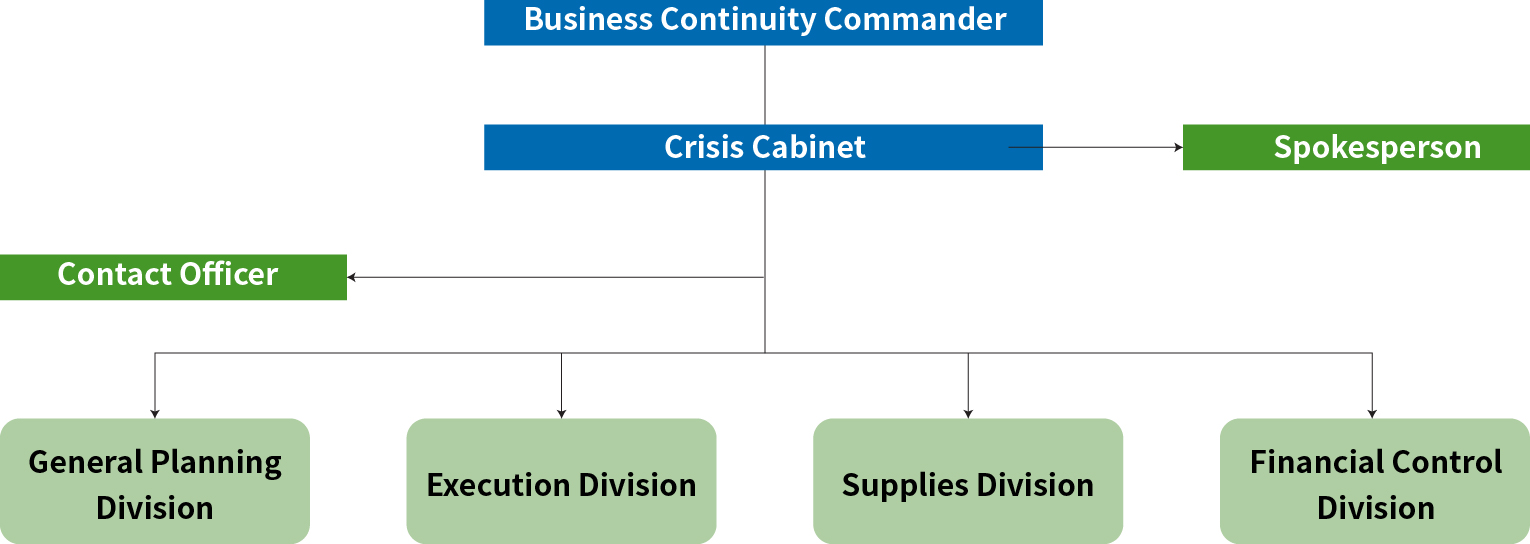 Innolux’s Business Continuity Management Architecture
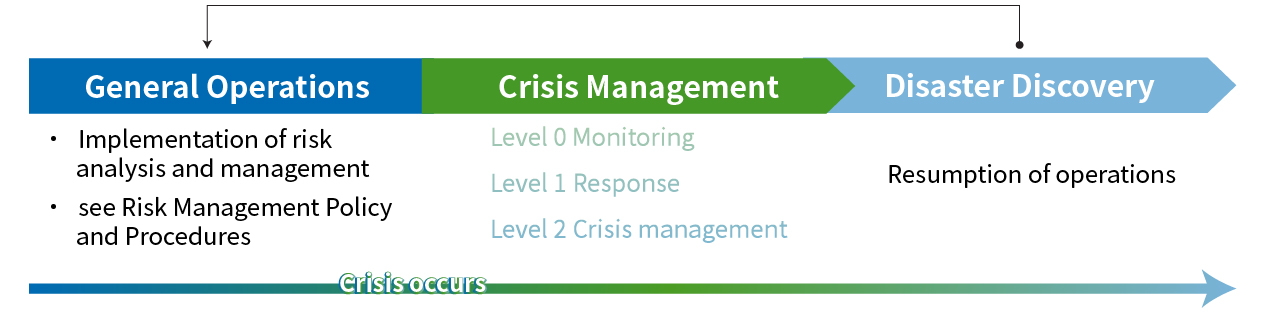 Innolux’s Business Continuity Plan
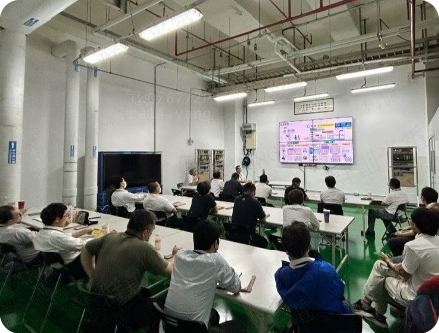 Anti-water shortage and drought initiatives Anti-water shortage and drought initiatives
|
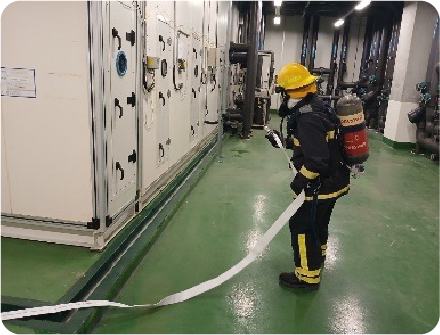 Fire scenario drills in the make-up air units Fire scenario drills in the make-up air units
|
Due to accelerating digital transformation and elevated cybersecurity risks, businesses must establish stable information security management mechanisms to safeguard operational stability and data security. Innolux is fully aware of the importance of information security to ensure corporate sustainability and maintain the trust of stakeholders. We are committed to building a comprehensive information security framework that protects operational data, client confidentiality, supply chain information, and employee privacy. To ensure the effectiveness and continuity of our security strategies, we have established clear information security policies in accordance with international standards and industry best practices and implemented a range of measures, including risk mitigation, incident response protocols, and employee training.
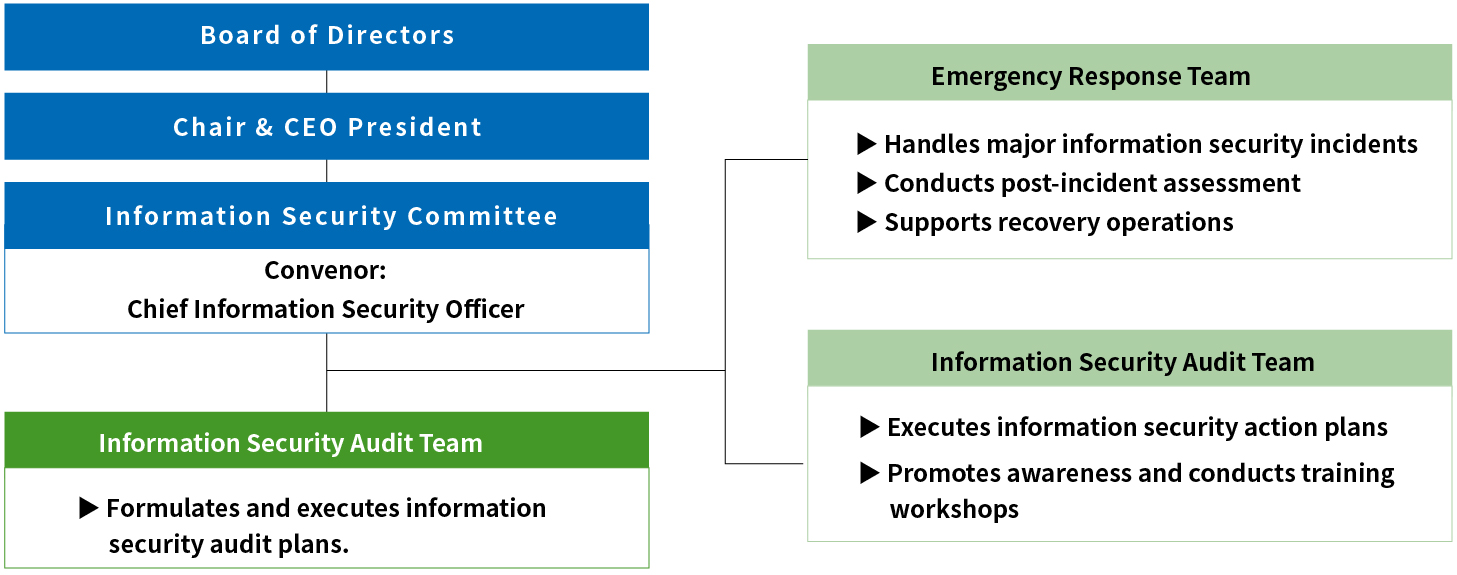 Organizational Structure and Responsibilities
To maximize the effectiveness of our information security governance, Innolux submits an annual Cybersecurity Governance Report to the Board of Directors in the fourth quarter of each year. This report includes the results of information security risk assessments, the implementation status of critical infrastructure protection measures, summaries of major cybersecurity incidents, and future improvement plans. The purpose of this mechanism is to ensure that senior management maintains a clear understanding of the evolving cybersecurity landscape and that decision-making remains aligned with our Enterprise Risk Management (ERM) framework. Furthermore, in accordance with our corporate governance principles and international standards, all key information security strategies are subject to review and oversight by the Board of Directors.
Innolux conducts an annual cybersecurity maturity assessment to evaluate the effectiveness of its information security management system. The assessment applies quantitative indicators to measure the performance of policy implementation and risk management mechanisms, the strength of technical applications, employee cybersecurity awareness, and supply chain cyber defenses. This assessment examines the effectiveness of our corporate information security management system, as well as opportunities for continuous improvement.
Since 2020, Innolux has adopted the Security Platform as a Service (SECPAAS) developed by the Industrial Technology Research Institute (ITRI) to identify system vulnerabilities and adjust network security strategies across its manufacturing sites, thus reinforcing information resilience and mitigating cybersecurity threats. In 2023, the Company further enhanced its cybersecurity framework by introducing the U.S. National Institute of Standards and Technology (NIST) Cybersecurity Framework (CSF) built around five core aspects: Identify, Protect, Detect, Respond, and Recover. These measures strengthen Innolux’s ability to optimize information security operations, improve cybersecurity emergency response, and strengthen its overall digital resilience.
n 2024, Innolux achieved a SECPAAS cybersecurity maturity score of 92, obtaining the highest protection rating (Grade A). This demonstrates the Company’s excellence in cyber risk mitigation, incident response, and governance and positions it as a leader in the industry. Through ongoing improvements to its cybersecurity technologies and management systems, Innolux remains focused on safeguarding business continuity and forward-looking cybersecurity defense capabilities.
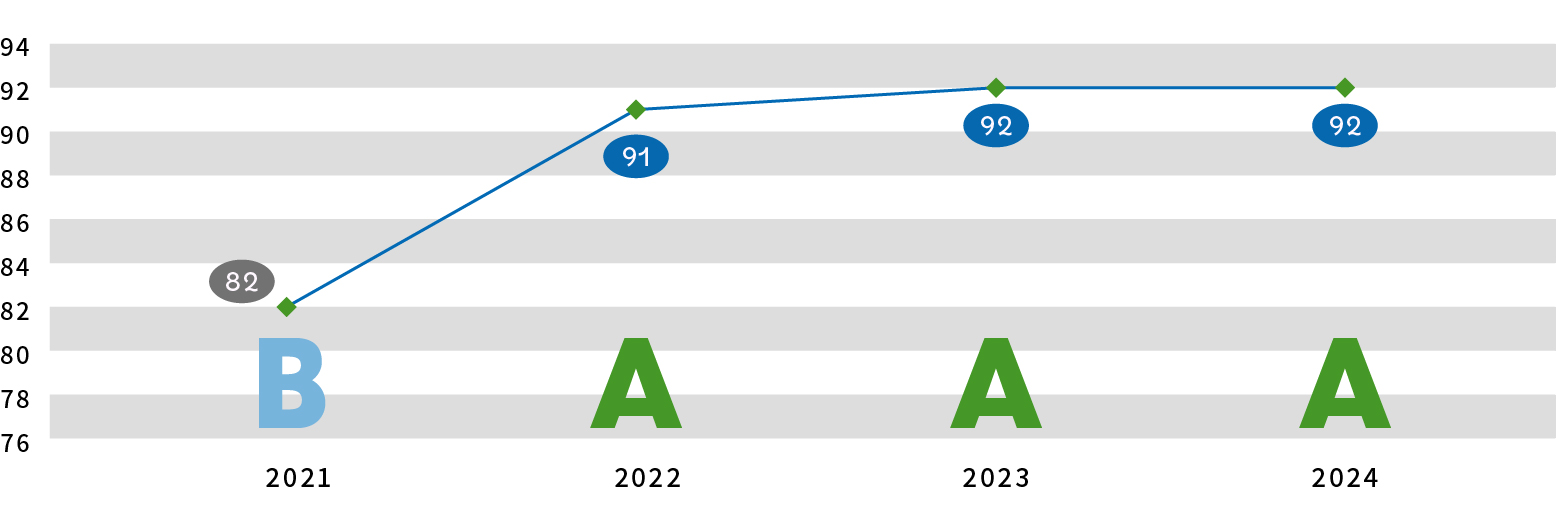 Information Maturity Assessment Chart
Based on ISO 27001 and the NIST Cybersecurity Framework (CSF), Innolux has established a robust information security management system built on five pillars—Identify, Protect, Detect, Respond, and Recover—ensuring the confidentiality, integrity, and availability of information assets. To support this framework, Innolux regularly conducts asset inventories and risk assessments, enhances access control for sensitive data, and ensures the security of IT infrastructure and critical data. The Company has implemented enhanced internal network programs and source code scanning mechanisms to strengthen defense capabilities in compliance with ISO 27001 requirements.
Real-time threat detection is enabled through cybersecurity monitoring systems that track anomalies and potential threats. Innolux also conducts regular phishing simulations and social engineering drills to raise employee awareness and reduce vulnerability to cyberattacks. To ensure preparedness, the Company has established a cybersecurity Incident Response Plan (IRP) that is integrated with its Business Continuity Plan (BCP) and disaster recovery mechanisms. These systems enhance Innolux’s ability to respond timely and effectively to incidents, minimizing potential disruptions to our operations.
| Timeline | Description |
|---|---|
| Short-term: 2025 |
Information Security Goals
|
Mid-to Long-term: 2030 |
Information Security Commitments
|
Innolux has established a cybersecurity Incident Response Plan (IRP) in accordance with ISO 27001 and the NIST Cybersecurity Framework (CSF) to ensure timely and effective responses to cybersecurity incidents, minimize operational disruptions, and maintain business continuity. Through its Security Operations Center (SOC) and Advanced Persistent Threat (APT) detection systems, the Company enforces 24/7 monitoring of potential threats and classifies incidents for appropriate reporting and response measures based on the incident level, minimizing operational impacts.
Innolux conducts cybersecurity incident reporting and response drills at least twice a year to ensure all departments are equipped to respond promptly and effectively to potential threats. In 2024, the Company conducted 13 drills for critical core systems, covering various cybersecurity threats and response procedures to ensure timely responses while maintaining operational continuity during cyberattacks.
In April 2024, Innolux conducted a Breach and Attack Simulation (BAS) to simulate real-world cyberattacks and test the effectiveness of its defenses. The exercise included simulated hacking and network attacks to validate the security of the Company’s infrastructure and cybersecurity architecture. Following the exercise, the Company optimized system configurations to enhance real-time defense capabilities.
In 2024, no major cybersecurity incidents occurred, nor did the Company incur any penalties for regulatory violations, demonstrating strong performance in cybersecurity management.
Innolux is dedicated to ensuring full compliance with international standards, including ISO 27001, DJSI, and GRI, in its cybersecurity management. A formal incident reporting mechanism is in place to ensure timely response, regulatory compliance, and transparency in the event of any incident that may impact operations. By strengthening monitoring, response, and recovery mechanisms, Innolux effectively enhances cyber resilience, operational stability, and sustainable development.

Innolux has established backup mechanisms for critical systems and validates response capabilities through disaster recovery (DR) drills. The Company also maintains a robust Business Continuity Plan (BCP) to ensure operations can be quickly restored even in the event of major cybersecurity incidents, thereby minimizing risk and maintaining business integrity.
Innolux continues to promote cybersecurity education and awareness through phishing simulations and social engineering drills. In 2024, the Company launched a phishing email recognition training program with participation from 11,454 employees and a 100% completion rate, providing baseline cybersecurity awareness across the organization. Additionally, 22 cybersecurity bulletins were issued and online training sessions were conducted with a 100% completion rate, reinforcing compliance and internal capabilities. These efforts have laid a solid foundation for sustainable growth by ensuring the regulatory compliance of our security policies and fostering a strong cybersecurity awareness and capability among our employees.
To improve training effectiveness, the Company established a cybersecurity training KPI with a target achievement rate of 80%. In 2024, the actual compliance rate reached 100%, exceeding the set target.
| Year | Cybersecurity training KPI | Actual compliance rate |
|---|---|---|
| 2022 | ≥80% | 100% |
| 2023 | ≥80% | 100% |
| 2024 | ≥80% | 100% |
To mitigate supply chain–related cybersecurity risks, Innolux has implemented a Supply Chain Risk Management (SCRM) platform that classifies and assesses vendors’ cybersecurity maturity to ensure compliance with corporate standards. All on-site personnel must pass cybersecurity workstation checks to prevent confidential data leaks, and vendors are required to sign Non-Disclosure Agreements (NDAs) to ensure full compliance with information security protocols. To further protect information security, we employ a Mobile Device Management (MDM) system to strengthen access control and protect sensitive information on mobile platforms.
To enhance oversight of supply chain cybersecurity, Innolux also conducts regular audits and training for supply chain partners to ensure their cyber protection capabilities meet corporate standards. By fostering collaboration with suppliers, the Company continues to improve the overall maturity of its supply chain cybersecurity and reduce the risk of information leaks due to supply chain vulnerabilities.
To further strengthen supply chain cybersecurity, Innolux implemented several cybersecurity enhancement measures in 2024, actively engaging with supply chain partners to raise cybersecurity standards through interactive engagement sessions and knowledge-sharing events. Key activities conducted in collaboration with our suppliers in 2024 include:
| Date and Event | Participating Companies | Purpose | Outcomes | External Benefits |
|---|---|---|---|---|
| 2024/02/20 Supply Chain Cybersecurity Enhancement |
CHENG MEI MATERIALS TECHNOLOGY, CHIMEI, Innolux | Improve supply chain cybersecurity | Enhanced suppliers’ cybersecurity management capabilities, reducing the risk of confidential data leaks due to vendor vulnerabilities | Acquired expertise in cybersecurity management and monitoring practices, enabling more robust defense measures |
| 2024/05/27 Cybersecurity Knowledge Exchange |
MIRLE GROUP, Innolux | Cybersecurity best practices exchange | Supported suppliers in improving cybersecurity practices through knowledge exchange. | Acquired expertise in cybersecurity management and monitoring practices, with effective application to real-world implementation |
Through these efforts, Innolux not only strengthened its own internal cybersecurity defenses, but also significantly enhanced the cybersecurity maturity of its supply chain partners, mitigating the risk of vendor vulnerabilities and ensuring stable operations and data security.
As digital transformation accelerates, Innolux continues to reinforce cybersecurity in cloud environments and operational technology (OT) systems to ensure the integrity of manufacturing operations. The Company is also advancing AI-driven cybersecurity protection by leveraging behavioral analytics and machine learning technologies to enhance anomaly detection and automate incident response.
To further enhance cybersecurity resilience, Innolux actively participates in domestic and international cybersecurity alliances. Through intelligence sharing and collaborative defense mechanisms, the Company strengthens its threat monitoring and response capabilities, ensuring information security and supply chain stability.
| Participating Organizations | Objectives |
|---|---|
| Forumof Incident Response and Security Team, FIRST | Gather cybersecurity threat intelligence and engage in international cybersecurity information exchange |
| Taiwan Computer Emergency Response Team, TWCERT | |
| Science ParkIn formation Sharing and Analysis Center, SP-ISAC | |
| Taiwan Chief Information Security Officer Alliance, CISO | Share best practices in information security technologies |
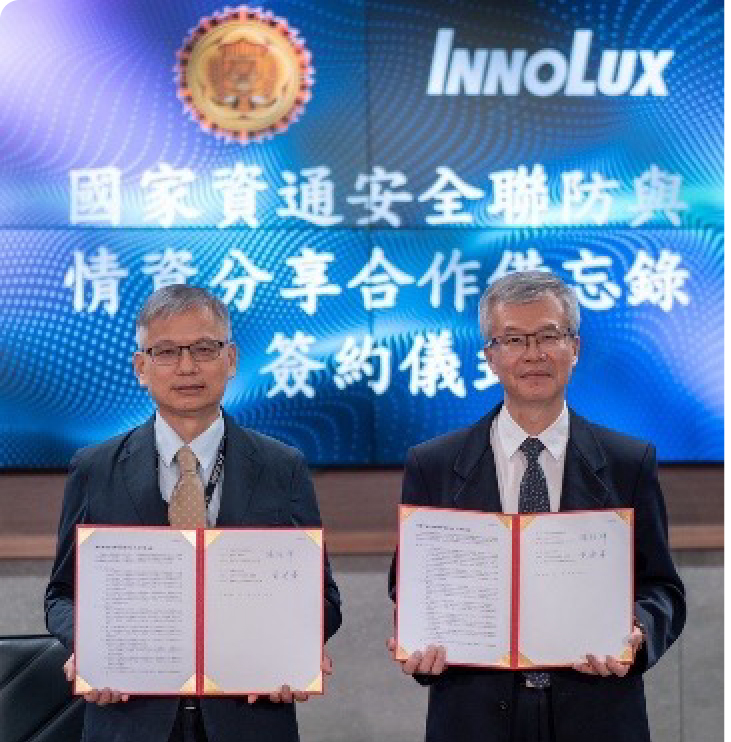
| Ministry of Justice Investigation Bureau | Sign cybersecurity collaborative defense and intelligence-sharing memorandums to enhance defense capabilities |
Through these international and regional collaborations, the Company gains timely access to the latest Indicators of Compromise (IOCs), enhancing its cybersecurity detection capabilities and optimizing incident response mechanisms, thereby further strengthening Innolux’s overall cybersecurity resilience.。